Cloud Computing Benefits: Why Businesses Are Moving to the Cloud
Digital transformation has changed how organizations manage technology infrastructure. Instead of maintaining expensive physical servers, businesses now use cloud computing to access computing resources online.
Cloud computing enables companies to innovate faster, scale efficiently, and operate globally without heavy IT investments.
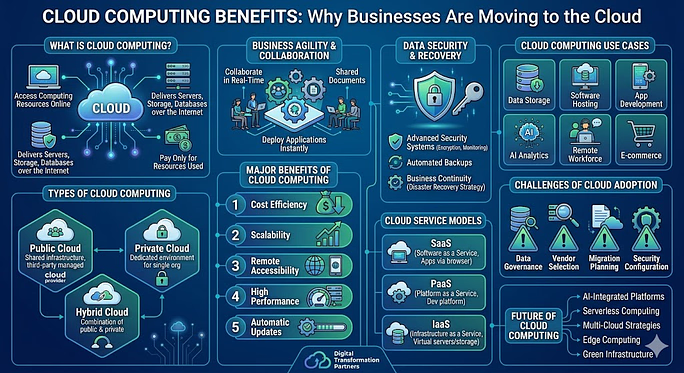
What is Cloud Computing?
Cloud computing delivers computing services such as servers, storage, databases, networking, and software over the internet instead of local infrastructure.
Organizations can access technology on-demand without owning hardware.
Cloud computing allows businesses to pay only for resources they use, improving flexibility and efficiency.
Types of Cloud Computing
Public Cloud
Shared infrastructure managed by third-party providers.
Private Cloud
Dedicated environment for a single organization.
Hybrid Cloud
Combination of public and private cloud systems.
Major Benefits of Cloud Computing
1. Cost Efficiency
No need for expensive hardware purchases or maintenance.
2. Scalability
Resources scale automatically based on business demand.
3. Remote Accessibility
Employees can access applications from anywhere.
4. High Performance
Cloud providers offer powerful infrastructure and global servers.
5. Automatic Updates
Software and security patches are managed automatically.
Improved Business Agility
Cloud computing allows companies to launch products faster.
Development teams can deploy applications instantly without waiting for infrastructure setup.
This accelerates innovation cycles and reduces operational delays.
Enhanced Collaboration
Cloud platforms enable teams to collaborate in real-time.
Shared documents, centralized data, and remote access improve productivity across distributed teams.
Data Security and Backup
Cloud providers invest heavily in advanced security systems including encryption, monitoring, and automated backups.
Cloud environments also support disaster recovery strategies, helping businesses recover quickly from failures.
Business Continuity and Disaster Recovery
Traditional IT systems risk data loss during outages or disasters.
Cloud computing ensures:
- Automatic backups
- Redundant infrastructure
- Rapid recovery capabilities
This minimizes downtime and protects operations.
Cloud Computing Use Cases
Businesses use cloud technology for:
- Data storage
- Software hosting
- Application development
- AI analytics
- Remote workforce solutions
- E-commerce platforms
Almost every industry now relies on cloud services.
Cloud Service Models
SaaS (Software as a Service)
Applications delivered through browsers.
PaaS (Platform as a Service)
Development platforms for building applications.
IaaS (Infrastructure as a Service)
Virtual servers and storage resources.
Challenges of Cloud Adoption
Despite benefits, businesses must consider:
- Data governance
- Vendor selection
- Migration planning
- Security configuration
Working with experienced cloud experts ensures successful implementation.
Future of Cloud Computing
Cloud technology continues evolving with:
- AI-integrated cloud platforms
- Serverless computing
- Multi-cloud strategies
- Edge computing
- Green cloud infrastructure
Cloud adoption will remain central to digital business growth.
Conclusion
Cloud computing empowers businesses with flexibility, scalability, and cost optimization.
Organizations adopting cloud strategies gain faster innovation, improved collaboration, and stronger competitive positioning in the digital economy.